

PUBLIC ART PROGRAM 2026
5-8 MARCH

CAN Art Fair Madrid once again brings art into the street in its tenth edition. From March 3, the work "Winter Cut" by Yutaro Inagaki will transform the central plaza of Matadero Madrid into the perfect setting to discover some of the most cutting edge sculptural expressions in contemporary art.
Represented by the gallery Shankay (Porto/Dubai, Portugal/UAE), Inagaki arrives at the fair with a proposal that directly engages with one of the fair’s defining features: conceiving site specific interventions for the urban space that extend beyond the venue and meet the public in the street.
With the support of Dropscom, "Winter Cut" unfolds as a monumental inflatable installation that reinterprets his imagery of stray dogs wrapped in puffer jackets, that everyday “armor” which protects and at the same time standardizes, activating in Matadero Madrid a reflection on anonymity, and contemporary urban life.
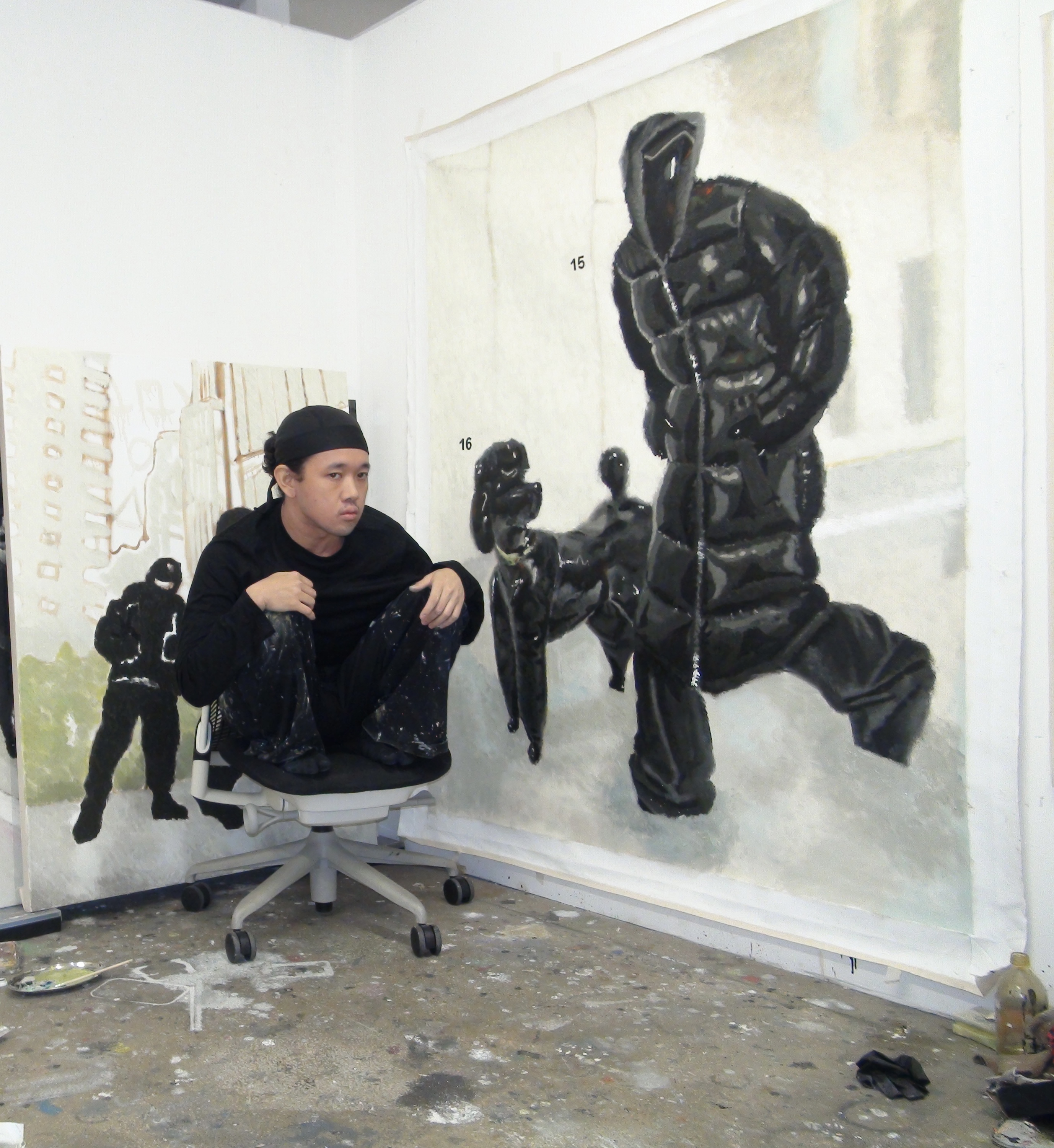
Yutaro Inagaki
Yutaro Inagaki (n. 1998) es un artista japonés contemporáneo que actualmente vive en Londres. Trabaja principalmente en la pintura figurativa. Criado en las afueras de Tokio, desde hace tiempo le fascina la idea de la metrópolis. En la adolescencia se sumergió en el graffiti y en la exploración urbana en torno a Tokio, experiencias que le llevaron a empezar a comprender la compleja relación entre las ciudades y las personas que las habitan. Estos primeros encuentros siguen alimentando hoy sus murales, proyectos de arte público y práctica de estudio.
Inagaki está desarrollando actualmente una serie de pinturas figurativas que representan la vida cotidiana en entornos urbanos. Las figuras de sus obras suelen aparecer oscurecidas o pintadas de negro, ocultando rasgos regionales o culturales para enfatizar el anonimato. Representadas como si estuvieran hechas de materiales sintéticos, sugieren una presencia poshumana.
Habiéndose criado en la sociedad japonesa (homogénea y orientada al grupo), Inagaki lleva mucho tiempo cuestionando el lugar de la identidad individual dentro del colectivo. Las formas humanas y animales recurrentes en su trabajo exploran temas como la opresión y el deseo, la tensión y la liberación, en el contexto de la vida urbana.